
Ode to Margo Replogle
On grief and the parts of her I never got to know

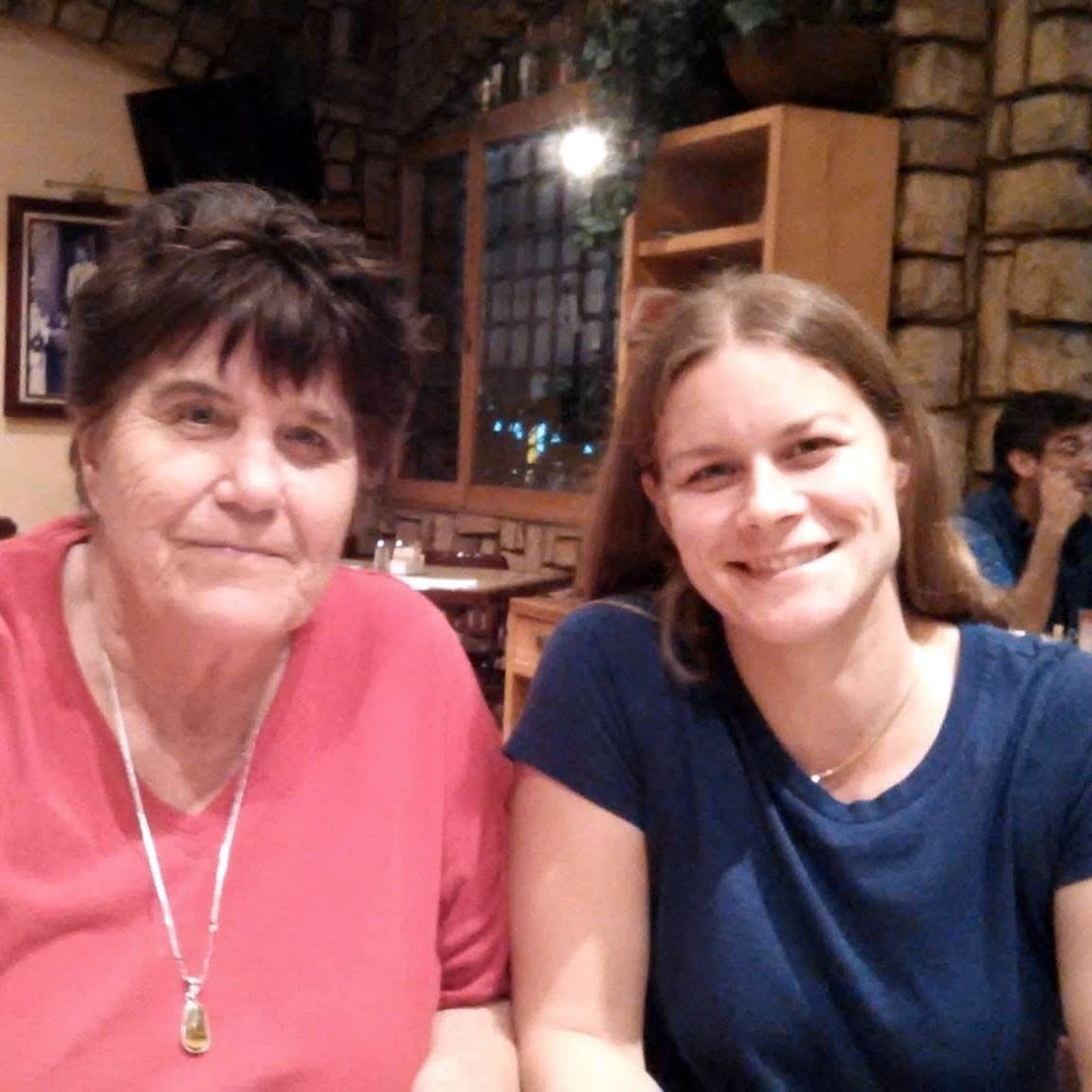
May 26th marks the 10th anniversary of my mom’s death. It was sudden. She drove up from Florida to visit New York for a few weeks, but we only got a day together. I thought she was fine. Then she was gone. And I spent the next several years learning to live without a mom.
I read books and articles on grief. Yet they always felt incomplete in one specific way. They talk about how to carry the grief, but not how to carry a person you only ever knew in part.
The Circles of Grief
I eventually came across a framework called Circle of Grief. It offers a guideline on how to support someone during a crisis, or what to say to someone’s who’s grieving.
You start by identifying the person who’s closest to or most affected by the crisis. Encircled around them are outer rings, listed in order of closeness (immediate family, close friends, other friends and family, and so on).
The circle works by “comforting in, dumping out.” So support always goes to people in the inner circles, while expressing worry, anger or fear to people in the outer circles. But my experience didn’t feel cleanly hierarchical.
I saw how it could be helpful for early grief and social navigation. People often struggle to know what to do or say and the Circle of Grief gives them a clear role. I don’t think the model is wrong, so much as doing a specific job. Yet it flattens something that never felt flat.
The Silence of Grief
What happened in my case was people held their memories back. My mom’s friends, co-workers, and even other family members would mention her cautiously. It felt like they didn’t want to say too much, say the wrong thing, or come off like they were centering themselves.
But I wanted to hear those stories. I wanted to know what she meant to them. I wanted to know that part of her. I wanted to know “Margo.”
More than Just “Mom”
After she died, I called my mom’s friends—some of whom she’d had known since high school. I thought it would be best coming from me. She had been friends with some of these women for over fifty years. They stayed connected after marriage, children, divorce, out-of-state moves. They had memories of her as a plucky teen, a young mom, a divorcée. All of those experiences were part of her.
Then there are my older cousins. My parents were Aunt Margo and Uncle Eugene. The cool aunt and uncle who came by on my dad’s motorcycle. I never knew that side of her either. My parents had me later in life and sometimes it felt like the party was over by the time I came along.
She even had co-workers she stayed friends with years after she left those jobs. They banded together to make the work day bearable, sharing stories and laughing their frustrations away after work. They got to know another side of Margo.
Who Was Margo?
It’s hard to summarize someone’s life. I guess that’s why obituary writer is a job. But here’s what I can tell you about Margo.
She was loud, outspoken, and funny. She had an unforgettable laugh that everyone mentions when they talk about her. And she was deeply relational. She was a friend, a confidant, and a mother figure to those who needed one. When she died, I had friends from as far back as elementary school reach out and tell me what my mom meant to them.
Yes, I was at the center of losing her, but I was never at the center of knowing her. Every person only ever holds part of someone. My brothers have their own memories. So does my step-dad.
We all sit in the center with the same incomplete picture. None of us have all of her memories from her childhood, her first marriage, her work life, or her moments alone.
Ten year later, I’m still trying to put her together. Not just for me, but for anyone who may someday want to know her.
If you want to share, you can leave a comment.
I’m open to hearing about your experience with grief or the people you still carry in pieces.
Margo sounds like an amazing person. I wish I could have known her. This is an honorable, loving ode, Jennifer~ The dynamics and flowing experiences of grief are so complex. Sending support as you continue to "flow in that river."
I can relate to your experience of knowing your mom "in part." My mom, Marge (or Margie) had a natural mischievousness, reflected in her sparkling blue eyes. Loving, and complicated. I knew and know some stories of who she was outside of a mom, but know there was much more I did not know. When she was diagnosed with Alzheimer's when I was in my 30s, (She had me at 36) - I began grieving in one way, before she even physically left this world. So much I would not, could not know. I reached out to those who knew her too. It helped. How people honor and grieve their mothers is intertwined, complex. We do the best we can. In whatever way we can.
I love that beautiful photo of you two together in Mexico City. It's those types of images, and our memories, that can provide solace, comfort, and loving energy.
If you are ever interested, or find the need, I would recommend the author Jessica Handler's book, "Braving the Fire, A Guide to Writing About Grief and Loss." Jessica has her own unique story about dealing with grief and loss and is an incredible writer and instructor too. (I've taken many of her classes). She writes fiction too!